Originally published · Updated
[ TL;DR ]
Key takeaways
- Technical answers need clear sources, tested conditions, and limits that buyers can check.
- Search access and model training permissions require separate decisions.
- Product releases and changed evidence should trigger substantive content reviews.
- Measure keyword rankings, AI citations, answer accuracy, and business outcomes separately.
- Useful community contributions give buyers additional places to evaluate your expertise.
Accurate product information can still be missing from AI answers. I see fragmented execution: teams add summaries and FAQs without connecting their claims to technical evidence. A useful GEO strategy for technical GTM starts with the facts a buyer needs to make a decision. For the wider GTM picture, see what 70,000 engineers and 780 marketers taught us about GTM in B2B tech.
My career began with researchers and academic publishers. Later, I managed content for tech startups at an SEO agency. Keywords moved from library metadata to a way of helping people find product information. As AI search gained traction, I had to rethink discoverability again. The practical question remains familiar: can someone find the information they need and check that it’s right?
Generative engine optimization, or GEO, improves how brand information is available and understood in generative answers. It overlaps with SEO and depends on accurate, accessible content. Use the B2B Tech Marketer’s Guide to GEO and AI Search to plan the broader program.
Close the gap between marketing claims and product facts
The “entity gap” is editorial shorthand here for missing product context. Entities are identifiable things, such as a product, platform, or technical standard. Naming them helps explain a claim, but names alone don’t establish expertise.
Consider a hypothetical cloud security architect reviewing a Kubernetes integration page. “Works with your environment” leaves deployment permissions, supported versions, and operational limits unanswered. Those details determine whether the integration fits the architect’s system.
SEO and GEO share the need for useful answers and discoverable pages. Google AI Overviews, Google AI Mode, and ChatGPT search are search experiences with different behaviors. Avoid assuming that every assistant retrieves sources or evaluates them identically.
A summary can include a citation. Missing attribution can have several causes, including access problems, source selection, or differences between prompts. Treat it as a question to investigate, without diagnosing a formatting failure from one response.
1. Make technical answers easy to verify
Lead with a clear answer, then show the evidence and conditions behind it. A buyer should understand both the claim and its limits without piecing together unrelated pages.
For an implementation guide, explain the supported task before describing the setup. Put prerequisites beside the instructions and known exceptions beside the result. Keep the answer useful when someone reads only that section.
For example, a hypothetical benchmark page might report throughput under a specific workload. Its usefulness depends on the test environment, measurement method, and published results. A number without those conditions gives a platform engineer little basis for comparison.
Keep an evidence record for each important claim
Use a short checklist during drafting and technical review. The record should point to evidence another person can inspect.
- Record the product version and environment actually tested.
- Link the primary documentation or reproducible test behind the claim.
- State assumptions, prerequisites, and known limitations beside the answer.
- Name the technical reviewer and record when the claim was checked.
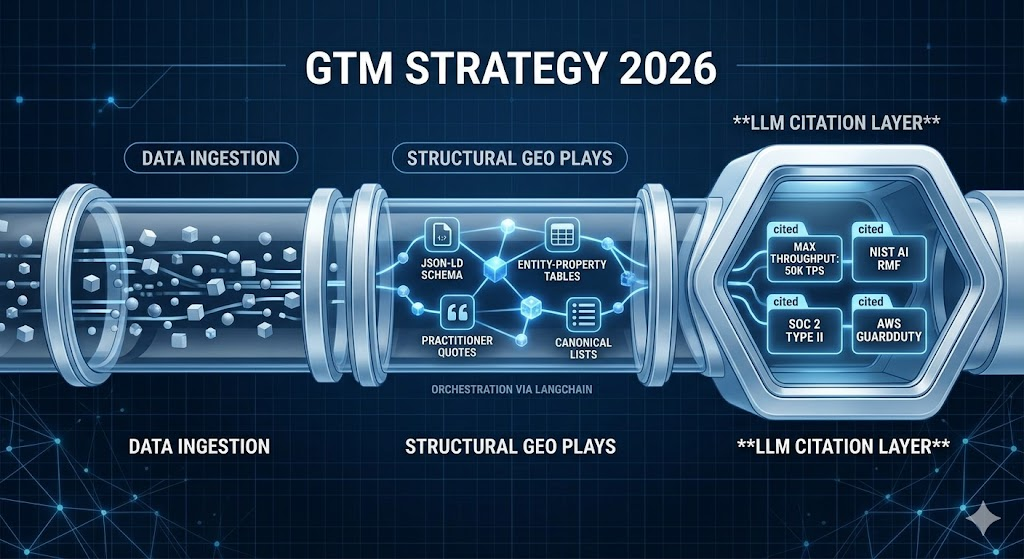
Use tables when readers need to compare the same attributes across options. Use prose for reasoning and ordered lists for a sequence. Choose the format that makes the decision easiest to understand.
Keep factual sources close to their claims. If evidence is missing, narrow the statement or leave it out until someone can verify it. Clear presentation helps evaluation, but no format forces an AI citation.
2. Make important pages accessible to search systems
Check whether search systems can reach the page and read its main content. Ask your web team to inspect the actual response alongside the rendered browser view.
- Make important answers available in the initial HTML, including content otherwise hidden behind interactive controls.
- Check HTTP status codes, indexability, and self-consistent canonical URLs.
- Review robots.txt, firewall rules, and content delivery network settings for the intended crawlers.
- Keep sitemaps current and link important pages from relevant, accessible pages.
Separate search access from training permissions. OpenAI’s crawler documentation identifies OAI-SearchBot for search and GPTBot for potential training use. ChatGPT-User handles certain user-triggered visits.
Google’s common crawler documentation distinguishes Googlebot from Google-Extended. Googlebot serves Google Search. Google-Extended is a usage-control token without a separate HTTP user agent, and it doesn’t control Google Search inclusion.
Keep structured data faithful to the page
Google’s AI optimization guide says generative search needs no special schema. Google Search also ignores llms.txt for visibility and rankings.
Use Article markup for an editorial article, with accurate author and publication details. Keep structured data consistent with visible text and check the existing graph before adding anything. A useful visible FAQ can stand on its own.
If a page disappears behind a login or browser challenge, fix that access problem first. Adding markup won’t repair an inaccessible answer. Keep any optional machine-readable experiments assigned to an owner who can maintain and evaluate them.
3. Match headings to buyer questions
Write headings around the decision your target buyer needs to make. Name the relevant product or system when that detail changes the answer.
Build the question set around the decisions your cybersecurity buyer personas need to make. Use sales questions, support requests, and product documentation to identify the uncertainties behind each topic. Keep the original question attached to the brief.
A hypothetical platform engineer evaluating a Kubernetes integration needs more than “Improve cloud efficiency.” A heading such as “Which permissions does the Kubernetes integration require?” sets a specific expectation. The answer should explain the permissions and their purpose.
Google’s AI features documentation says AI Overviews and AI Mode may use query fan-out. That means multiple related searches can support an answer. Google provides no universal query count.
Use that behavior as a reason to cover relevant follow-up questions. Deployment requirements, support boundaries, and alternatives may deserve separate sections when they affect the decision. Avoid adding unrelated product names to satisfy an entity quota.
Before approving the outline, ask what each heading promises and whether the section delivers it. A specific heading with a vague answer creates another gap. Keep headings concise enough for someone scanning the page to find the right section.
4. Support claims with practitioner evidence
Practitioner evidence should explain a technical decision and show how the conclusion was reached. A named quote adds context when readers can understand the speaker’s experience and its limits.
Start working with subject matter experts before drafting technical claims. Ask which assumptions matter, where the approach fails, and what evidence can be published. Give the expert the brief while those choices are still open.
Imagine a security engineer reviewing a guide to configuring access controls. The useful contribution explains why a permission is necessary and how the configuration was tested. A general endorsement of the product leaves those questions unanswered.
Support factual statements with primary documentation, test results, or a reproducible example. Attribute observations as observations and distinguish them from measured findings. Get approval for the wording and context of every quoted contribution. Our four tests for human oversight help define who checks AI-assisted drafts and what they sign off on.
A permissioned quote library can preserve the source, date, topic, and approved wording. Recheck the context before reuse, especially after product changes. A quote about one deployment should stay tied to that deployment.
Keep the real author and an accurate bio attached to the article. Name a qualified technical reviewer when that person performed the review. Authorship helps readers assess responsibility, while evidence lets them assess the claim itself.
5. Connect related product and technical pages
Use internal links to connect a buyer’s question with the next useful piece of evidence. Links support navigation and discovery without promising that multiple pages will appear together in an AI answer.
A hypothetical product comparison might introduce an integration requirement that needs a longer explanation. Link that requirement to the relevant implementation guide. Link the guide to maintained documentation where readers can check supported configurations.
Review the route a reader can take through the topic. A concept page explains the category, a product page explains fit, and a technical guide explains implementation. Each page should contribute something distinct.
- Use descriptive anchors that identify the destination’s actual subject.
- Check that important new pages have relevant incoming internal links.
- Remove broken destinations and replace obsolete references with verified current pages.
- Keep product terminology and support claims consistent across connected pages.
Run a site crawl to find orphan pages and broken links. A heatmap can show visitor behavior, but it can’t establish whether a model trusts your content. Use each diagnostic tool for the behavior it measures.
Give your content owner responsibility for reviewing links after releases and migrations. The page receiving a link should still answer the question implied by its anchor. A working URL alone doesn’t establish that the destination remains useful.
6. Refresh facts when products and evidence change
Refresh content when its facts change, and record what was reviewed. A new timestamp without substantive work gives readers no reason to trust an old compatibility claim.
The Python Developer’s Guide version status records Python 3.8’s end of life as October 7, 2024. The Kubernetes release history records upstream end of life for Kubernetes 1.30 as July 15, 2025. Neither version belongs in an unqualified example of a current supported release.
Document the versions your team tested and the support policy that applies. Upstream support and a vendor’s extended support can differ. An older supported deployment can remain relevant to a buyer’s actual environment.
Assign factual sign-off and publishing ownership within your technical content approval process. Trigger reviews when releases change features, dependencies, limits, or recommended configurations. Schedule additional checks according to the page’s business importance.
For a hypothetical installation tutorial, a changed prerequisite should trigger a test of the instructions. Check the commands, expected output, and troubleshooting advice together. Record the tested environment so the next reviewer can repeat the work.
Maintain a compact change log with the source, tested version, reviewer, and substantive update. Preserve the original publication date and use an accurate modification date. Release notes and support notices provide concrete review triggers without guessing when a model’s knowledge changes.
7. Measure visibility, accuracy, and business results separately
Track what an answer says, what it cites, and what visitors do as distinct measures. A rise in citations doesn’t establish a rise in qualified pipeline.
Create a stable sample of buyer prompts covering product selection, implementation, and technical constraints. Repeat observations so a single response doesn’t become the whole result. Compare prompt coverage and measurement methods with our AI visibility tool evaluation guide.
For each observation, save the prompt, date, engine or model where available, location, browsing mode, and repetition count. Record the answer and its actual source links. Visibility tools sample responses, so their reports describe the tested conditions.
- Search performance: Report keyword rankings and organic search visits separately from AI answers.
- Answer visibility: Separate brand mentions from linked citations and record competitor presence.
- Factual accuracy: Check product descriptions, limitations, and support details against approved evidence.
- Business outcomes: Track identifiable referrals, conversions, and pipeline using a stated attribution method.
If an answer misstates a product limit, inspect the cited source and your current public documentation. Correct inaccurate visible facts, then repeat the observation. Avoid promising a fixed correction window or changing schema types solely to chase inclusion.
A controlled document-grounded evaluation can reveal whether supplied material supports an accurate answer. Uploading the document bypasses public discovery, so keep that result separate. Before-and-after observations can suggest useful changes, but they don’t isolate cause on their own.
To score drafts against a fixed rubric, adapt our free script for GenAI content creation evals. Our guide to ChatGPT and Gemini adds context for evaluating assistant workflows.
8. Publish useful evidence beyond your website
Contribute technical evidence where your target audience already asks questions and evaluates approaches. Choose a channel because the contribution fits the discussion and its rules.
On Reddit, answer the specific question with relevant experience, assumptions, and limitations. Disclose your affiliation and follow the community’s promotion rules. Avoid dropping a product link without helping the person who asked.
On GitHub, publish examples that another practitioner can inspect and reproduce. Include setup instructions, supported versions, expected behavior, and known limitations. Assign someone to maintain the example and respond when an issue reveals outdated guidance.
For Substack, contribute expert analysis suited to the publication’s audience. Explain the technical trade-off and provide evidence readers can check. Keep affiliations clear, including when the author works for the vendor being discussed.
A hypothetical troubleshooting article could become a focused community answer and a small reproducible repository. Adapt each contribution to its setting. Keep the underlying product facts consistent and link back only where the reference helps.
Plan for Discord’s upcoming rollout
Discord’s October 27, 2026 announcement schedules Server Web Pages for all Discoverable Servers from November 16, 2026. Eligible public-channel messages may appear on those pages and in web search from mid-December 2026.
The rollout is gradual and subject to server administrator and user controls. Private servers, direct messages, and group direct messages are excluded. As of this November 5 review, treat the wider rollout as upcoming.
Agree with moderators on what can be public before adapting community material. Respect contributors’ choices and preserve the context of their answers. Public availability creates an opportunity for discovery, without guaranteeing indexing or AI citations.
Where IOD fits
Keeping technical claims accurate across articles, documentation, and community contributions takes clear ownership. Your team needs someone to set direction, resolve factual questions, and keep approved messages consistent.
IOD is the AI-native content agency for cybersecurity, cloud and AI infrastructure. Our model is expert-directed: practitioner experts set the brief, approve the outline, and sign off before publication.
Stesh, IOD’s AI platform, researches and drafts against each client’s approved messaging, voice, audience, and claims. Expert corrections become rules applied to future work, helping preserve decisions across the content program.
Use our technical content partner comparison to examine production responsibilities. Include internal review time when evaluating cybersecurity content agency costs.
Talk to IOD about planning accurate technical content for your next product release.
[ FAQ ]
Frequently Asked Questions
Does GEO replace SEO for technical content?
GEO builds on technical SEO, useful answers, and credible evidence. Keep pages accessible while making product facts easy for buyers and search systems to understand.
Can tables or schema guarantee an AI citation?
No format or schema type guarantees a citation. Use tables for comparable facts and structured data that accurately describes visible content.
Does a document-upload test measure public AI visibility?
A document-upload test measures how an assistant uses the material you provide. Measure public visibility separately with repeatable search-enabled prompts and recorded source links.
Is llms.txt required for AI search visibility?
Google Search does not use llms.txt to improve visibility or rankings. Treat it as an optional experiment for other systems, with a maintenance owner and evaluation plan.
How often should technical content be refreshed?
Review content when product support, capabilities, evidence, or buyer questions change. Schedule additional checks based on business importance and record substantive updates with an accurate date.