
I Love the Cloud: My Never-Ending Journey with AWS
 [GUEST POST] I started exploring the cloud computing world around 5 years ago, and I must admit that my initial understanding of the cloud was a disaster. At first, it was difficult to find a comprehensive definition, but I finally settled on one from the National Institute of Standards & Technology (NIST). It clearly defined the cloud’s attributes and models, and removed my doubts regarding what falls under the cloud umbrella. The experience that I had finding this definition made me realize that I wanted there to be an easier way for others to find it, as well. Therefore, I decided to create my own list of cloud guidelines. This was a turning point in my cloud journey, as it pushed me to teach many students and IT professionals about cloud computing.
Stumbling upon AWS is inevitable when discovering the cloud, and just as with the cloud, my first interaction with AWS was not simple, either. I remember the moment of “Eureka!” that came after I was finally able to launch an EC2 instance and deploy a simple application. Sometimes, I laugh at the sheer joy I experienced from such a small achievement, but I realize that this was a stepping stone in my AWS journey and my love for Amazon. I am now able to manage bigger AWS cloud infrastructures, and I’ve consulted for and successfully designed various Amazon projects. I’ve conducted sessions on how to scale applications and how to make scalable applications using Amazon.
I see that two things have remained steady over the past few years: continuous innovations at AWS and my love for AWS. AWS has always kept me motivated to learn new things with its consistent new offerings, and I’d like to share the reasons that I believe make it the immense influence on the cloud that it is today.
(more…)

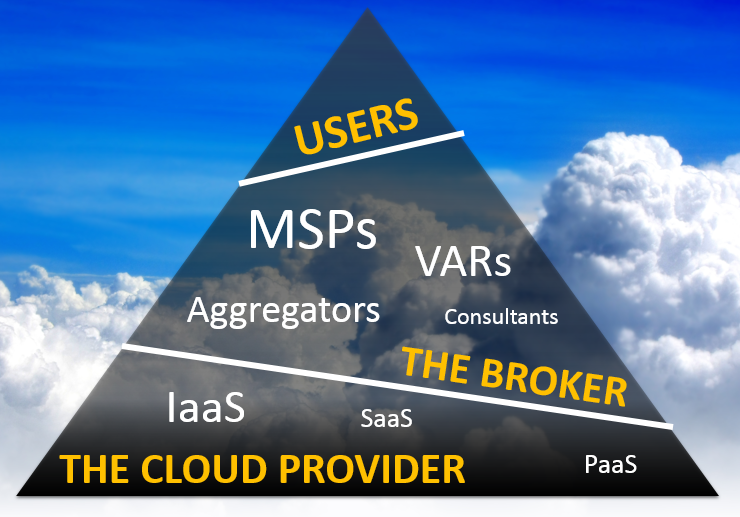 Cloud brokers were recognized and described by Gartner analysts as the `Intermediary services that support fast cloud adoption`. From their customers’ perspectives cloud brokers are the system integrators (SI) or the `cloud enablers` that support fast adoption and maintenance of cloud technologies. For example, the independent software vendor (ISV) can benefit greatly from a cloud managed service provider (MSP) starting with integrating into the underlying cloud infrastructure, all the way up to the offering stack wrappers, such as service provisioning methodologies’ implementation. From the cloud provider’s perspective, cloud brokers are key customers, value-added resellers and aggregators of its cloud services.
 Last month I attended HP Discover (disclosure: my participation was funded by
  The three layers of cloud computing IaaS, PaaS and SaaS occupy the headlines with significant capabilities undergo continuous improvement to host services in the cloud. This growing market is slowly changing so that offered services will become generic. The current evolving struggle is the deployment and management of SaaS applications in the cloud,